QR Code (abbreviated from
Quick Response Code) is the
trademark for a type of matrix barcode (or two-dimensional code) first designed
for the automotive industry. More recently, the system has become popular
outside the industry due to its fast readability and large storage capacity
compared to standard UPC barcodes. The code consists of black modules (square
dots) arranged in a square pattern on a white background. The information
encoded can be made up of four standardized kinds ("modes") of data
(numeric, alphanumeric, byte/binary, Kanji), or through supported extensions,
virtually any kind of data.
Invention
The QR Code was invented in Japan by the Toyota subsidiary Denso Wave in
1994 to track vehicles during the manufacturing process, and was originally
designed to allow components to be scanned at high speed. It has
since become one of the most popular types of two-dimensional barcodes.
Unlike the older one-dimensional barcode that was designed to be
mechanically scanned by a narrow beam of light, the QR code is detected as a
2-dimensional digital image by a semiconductor image sensor and is then
digitally analyzed by a programmed processor. The processor locates the three
distinctive squares at the corners of the image, and uses a smaller square near
the fourth corner to normalize the image for size, orientation, and angle of
viewing. The small dots are then converted to binary numbers and validity
checked with an error-correcting code.
Standards
There are several standards in documents covering the physical encoding of
QR Codes:
- October 1997 – AIM
(Association for Automatic Identification and Mobility) International
- January 1999 – JIS X
0510
- June 2000 – ISO/IEC
18004:2000 Information
technology – Automatic identification and data capture
techniques – Bar code symbology – QR code (now
withdrawn)
Defines QR code models 1 and 2 symbols.
- 1 September 2006 –
ISO/IEC 18004:2006 Information
technology – Automatic identification and data capture
techniques – QR Code 2005 bar code symbology specification
Defines QR code 2005 symbols, an extension of QR Code model 2. Does not
specify how to read QR Code model 1 symbols, or require this for
compliance.
At the application layer, there is some variation between most of the
implementations. Japan's NTT DoCoMo has established de facto standards for the
encoding of URLs, contact information, and several other data types. The
open-source "ZXing" project maintains a list of QR Code data types.
Uses
Formerly only for industrial uses, they have in recent years become
common in consumer advertising and packaging, because the popularity of smartphones "has put a barcode reader in everyone's pocket"
for the first time. As a result, the QR Code has become a focus of advertising strategy, since it provides quick and effortless access to the brand's website.
Beyond mere convenience to the consumer, the importance of this capability is that it increases the conversion rate
(that is, increase the chance that contact with the advertisement will
convert to a sale), by coaxing qualified prospects further down the conversion funnel
without any delay or effort, bringing the viewer to the advertiser's
site immediately, where a longer and more targeted sales pitch may
continue. Although initially used to track parts in vehicle
manufacturing, QR Codes are now (as of 2012) used over a much wider
range of applications, including commercial tracking, entertainment and
transport ticketing, product/loyalty marketing (examples: mobile
couponing where a company's discounted and percent discount can be
captured using a QR Code decoder which is a mobile app, or storing a
company's information such as address and related information alongside
its alpha-numeric text data as can be seen in Yellow Pages directory),
and in-store product labeling. It can also be used in storing personal
information for use by government. An example of this is Philippines
National Bureau of Investigation (NBI) where NBI clearances now come
with a QR Code. Many of these applications target mobile-phone users (via mobile tagging). Users may receive text, add a vCard contact to their device, open a Uniform Resource Identifier (URI), or compose an e-mail
or text message after scanning QR Codes. They can generate and print
their own QR Codes for others to scan and use by visiting one of several
pay or free QR Code-generating sites or apps. Google has a popular API to generate QR Codes,
and apps for scanning QR Codes can be found on nearly all smartphone devices.
QR Codes storing addresses and Uniform Resource Locators
(URLs) may appear in magazines, on signs, on buses, on business cards,
or on almost any object about which users might need information. Users
with a camera phone equipped with the correct reader application can scan the image of the QR Code to display text, contact information, connect to a wireless network, or open a web page in the telephone's browser. This act of linking from physical world objects is termed hardlinking or object hyperlinking.
QR Codes may also be linked to a location to track where a code has
been scanned. Either the application that scans the QR Code retrieves
the geo information by using GPS and cell tower triangulation (aGPS) or
the URL encoded in the QR Code itself is associated with a location.
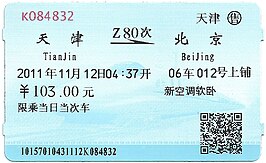
QR codes have been used and printed on Chinese train tickets since late 2009.
In June 2011, the Royal Dutch Mint (Koninklijke Nederlandse Munt)
issued the world's first official coin with a QR Code to celebrate the
centennial of its current building and premises. The coin was able to be
scanned by a smartphone and link to a special website with contents about the historical event and design of the coin.
This was the first time of a QR code used on currency.
Use in mobile operating systems
QR Codes can be used in Google's mobile Android operating system using Google Goggles
or 3rd party barcode scanners. QR Codes can be used in iOS devices
[iPhone/iPod/iPad] via 3rd party barcode scanners. The browser supports URI redirection, which allows QR Codes to send metadata to existing applications on the device. Nokia's Symbian operating system features a barcode scanner which can read QR Codes,
while mbarcode
is a QR Code reader for the Maemo
operating system. In the Apple iOS, a QR Code reader is not natively
included, but more than fifty paid and free apps are available with both
scanning capabilities and hard-linking to URI. Google Goggles is also available for iOS. With BlackBerry devices, the App World application can natively scan QR Codes and load any recognized Web URLs on the device's Web browser. Windows Phone 7.5 is able to scan QR Codes through the Bing search app. They can also be used on the Nintendo 3DS.
There are a number of websites that provide QR Code decoding. The
lack of functioning tools for decoding from image files or webcams
within either the MacOS or Linux PC-based operating systems make this
standard unpalatable as a data-backup method for storing private data, such as passwords or encryption keys.
Uses in retail
Recently there has been a move away from traditional magnetic card,
stamp or punchcard based schemes to QR code based loyalty programs.
One prominent example is the US-based Punchd, which became part of Google in 2011.
Others, like MazeCard,
have offered similar applications of QR codes in other continents.
URLs
URLs aided marketing conversion rates
even in the pre-smartphone era, but during those years faced several
limitations: the ad viewer usually had to type the URL, and often did
not have a web browser in front of them at the moment they viewed the
ad. The chances were high that they would forget to visit the site
later, not bother to type a URL, or forget what URL to type. Friendly URLs
decreased these risks but did not eliminate them. Some of these
disadvantages to URL conversion rates are fading away now that
smartphones are putting web access and voice recognition in constant
reach. Thus an advert viewer need only reach for their phone and speak
the URL, at the moment of ad contact, rather than remember to type it
into a PC later.
QR Code Virtual Stores
During the month of June 2011, according to one study, 14 million
mobile users scanned a QR Code or a barcode. Some 58% of those users
scanned a QR or bar code from their home, while 39% scanned from retail
stores; 53% of the 14 million users were men between the ages of 18 and
34.
The use of QR Codes for "virtual store" formats started in South Korea,
and Argentina,
but is currently expanding globally.
Big companies such as Walmart, Procter & Gamble and Woolworths have already adopted the Virtual Store concept.
Design
Storage
The amount of data that can be stored in the QR Code symbol depends on the datatype (
mode, or input character set), version (1,...,40, indicating the overall dimensions of the symbol), and error correction level. The maximum storage capacities occur for 40-L symbols (version 40, error correction level L), and are as follows (where
character refers to individual values of the input mode/datatype, as indicated):
| Numeric only |
Max. 7,089 characters (0, 1, 2, 3, 4, 5, 6, 7, 8, 9) |
| Alphanumeric |
Max. 4,296 characters (0–9, A–Z [upper-case only], space, $, %, *, +, -, ., /, :) |
| Binary/byte |
Max. 2,953 characters (8-bit bytes) (23624 bits) |
| Kanji/Kana |
Max. 1,817 characters | | | | |
Here are some sample QR Code symbols:
-
Version 1 (21×21). Content: "Ver1"
-
Version 2 (25×25). Content: "Version 2"
-
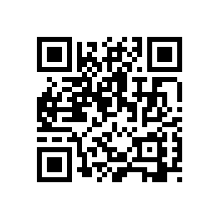
Version 3 (29×29). Content: "Version 3 QR Code"
-
Version 4 (33×33). Content: "Version 4 QR Code, up to 50 char"
-
Version 10 (57×57). Content: "Version 10 QR code, up to 174 char at H
level, with 57x57 modules and plenty of error correction to go around.
-

Version 40 (177×177). Content: "Version 40 QR Code can contain up to 1852 chars. ..."
 —Theresa Klein, an engineer at Orbital Sciences Corporation, created Achilles while she was a graduate student at the University of Arizona